
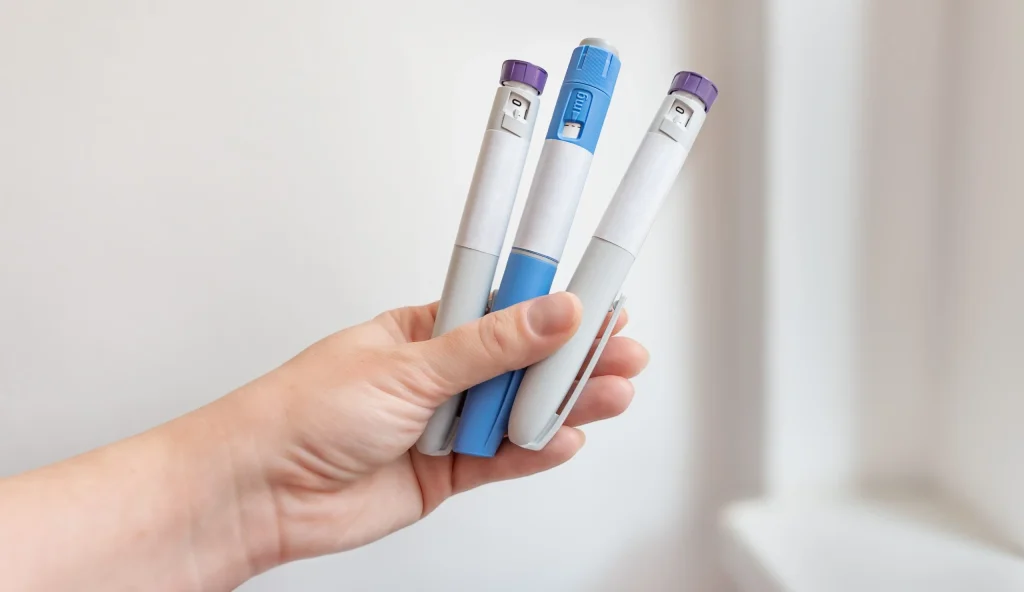
Medical weight loss injections include two main types: GLP-1 receptor agonists – such as semaglutide (Ozempic, Wegovy), liraglutide (Saxenda), and tirzepatide (Mounjaro, Zepbound) – and supportive injectables like vitamin and metabolic booster shots. These options work in different ways to help with weight management, and each is selected based on your medical history, lab results, and goals. This article explains how they work and what to consider when choosing an option.
“Medical weight loss injection” is a broad umbrella term. It covers prescription medications that change appetite signaling in the brain and gut, as well as nutrient-based injections that support energy and metabolism while you lose weight.
The distinction matters:
A GLP-1 medication is a prescription drug with a specific dosing schedule, monitoring requirements, and a defined set of side effects.
A booster injection is a supportive treatment – helpful for energy and wellness, but not a substitute for a weight loss medication.
At Total Healthcare MD, injections are one component of a larger medically supervised program that also includes personalized diet planning, one-on-one coaching, metabolic testing, and lab-based monitoring.
GLP-1 medications copy a hormone your body already makes. GLP-1 (glucagon-like peptide-1) is released in the gut after you eat, and it does several things at once:
Slows stomach emptying, so food stays in your stomach longer and you feel full sooner
Signals fullness to the brain, reducing appetite and the constant mental chatter about food many patients call “food noise”
Improves insulin response, stabilizing blood sugar and reducing the spikes that drive cravings
Because these medications influence both hunger and blood sugar, they were originally developed for type 2 diabetes management before their weight loss effects became widely recognized.
Supportive injections work differently. Vitamin and metabolic booster shots deliver nutrients like B12 or lipotropic compounds directly into muscle tissue, bypassing digestion for faster absorption. They do not suppress appetite, but they help address fatigue and low energy during a reduced-calorie diet.
So what are the different types of medical weight loss injections available today, and how do they compare?
GLP-1 receptor agonists are the most widely prescribed injectable weight loss medications. All are self-administered with a very fine needle – usually in the abdomen, thigh, or upper arm. Where they differ is in dosing frequency, molecular structure, and FDA-approved use.
Semaglutide is a once-weekly injection and the most recognized name in this category. It is marketed under two brand names for two approved uses – Ozempic for type 2 diabetes and Wegovy for chronic weight management.
Binds strongly to GLP-1 receptors and stays active for about a week, which is why weekly dosing works
Starts at a low dose and increases gradually; this titration gives your digestive system time to adjust and significantly reduces nausea
Highly effective at reducing appetite and food cravings when paired with lifestyle changes
Liraglutide is a daily injection rather than a weekly one. Saxenda is approved for weight management.
Clears the body faster, so side effects resolve more quickly if the medication is paused or stopped
A daily rhythm is easier for some patients to build into a routine than a weekly injection day
Tirzepatide is a dual agonist, activating both GLP-1 and GIP (glucose-dependent insulinotropic polypeptide) receptors. GIP is another gut hormone involved in insulin release and fat metabolism.
Mounjaro is approved for type 2 diabetes; Zepbound for chronic weight management
Both are once-weekly injections with a step-up dosing schedule similar to semaglutide
Targeting two pathways has shown exceptional efficacy in clinical trials, and some patients respond well after limited results with a single-pathway GLP-1
More mechanisms also means more potential for GI side effects during dose increases, so careful titration is important
B12 and lipotropic blends support energy, fat metabolism, and general wellness during a weight loss program. They are frequently paired with GLP-1 therapy, especially when reduced food intake makes adequate nutrition harder.
The appeal of injectable treatment is straightforward: it addresses appetite at the biological level rather than relying on willpower alone.
Benefits patients commonly report:
Meaningful reduction in hunger and cravings, making portion control easier
Sustainable, consistent weight loss that builds long-term habits – with peak results often in the first four weeks
Improved blood sugar readings
Better blood pressure and cholesterol numbers as weight decreases
More consistent energy once the body adjusts
Physician-supervised safety, with plan adjustments as your body responds
Weight loss also has ripple effects on conditions we treat regularly, including high cholesterol, high blood pressure, and PCOS.
Considerations to weigh:
These are prescription medications requiring a thorough medical evaluation
Injections usually require ongoing use to maintain results
Gastrointestinal side effects are common early on
Protein intake and resistance activity matter for preserving muscle
Results vary considerably from person to person
Nutrition and behavior changes remain essential
Appetite suppression creates an opportunity – what you eat during that window determines whether you lose fat and keep it off. That is why our program pairs injections with diet plans and weekly counseling.
Candidacy is determined during a medical evaluation, not by an online checklist. Generally, these medications are considered for adults with a BMI in the obesity range, or in the overweight range alongside a weight-related condition, such as type 2 diabetes, pre-diabetes, high blood pressure, high cholesterol, PCOS, or sleep apnea.
You may be a suitable candidate if you:
Have struggled to lose weight through diet and exercise alone
Have a BMI within clinical guidelines for these medications
Are committed to long-term lifestyle changes
Have tried other weight loss methods without success
Other factors our medical team reviews:
Personal and family medical history, including thyroid and pancreatic conditions
Current medications and possible interactions
Prior weight loss attempts and what happened
Lab work and metabolic markers
Pregnancy status or plans to become pregnant
Metabolic testing adds useful detail, showing how your body actually burns calories rather than relying on estimates. Some patients are not appropriate candidates for GLP-1 therapy – which is precisely why a supervised evaluation matters.
Treatment typically follows this pattern:
Evaluation and lab review – a thorough assessment of your health, goals, and history to confirm which medication fits
Personalized plan – may include GLP-1 injections, a personalized diet, coaching, and supplements
Starting dose at the lowest level, with instruction on injection technique and storage
Follow-up visits (about 20–30 minutes) to assess response, side effects, and progress
Gradual dose increases as tolerated
Ongoing nutrition and coaching support throughout
Most patients notice appetite changes within the first one to two weeks, with the most pronounced shift in the first four weeks. Progress afterward is steadier and slower – which is normal and sustainable. You can also text questions to our staff between visits, which many patients find helpful during the early adjustment period.
GLP-1 medications are FDA-approved and have been studied extensively and used safely by millions of patients – but they are not side-effect-free. The most common effects are digestive:
Nausea
Constipation or diarrhea
Reduced appetite to the point of skipping meals
Burping, reflux, or bloating
Fatigue during the first few weeks
These are usually strongest right after a dose increase and improve as your body adapts. Practical steps help: eat smaller meals, prioritize protein, stay hydrated, limit greasy and very sweet foods, and stop eating when you feel full rather than finishing out of habit. Starting low and titrating slowly also minimizes symptoms.
Less common but more serious concerns include pancreatitis, gallbladder problems, and kidney issues related to dehydration. These medications also carry a warning regarding thyroid tumors observed in animal studies, which is why personal and family thyroid history is reviewed before prescribing.
The main types of weight-loss injections include GLP-1 agonists – semaglutide, liraglutide, and tirzepatide – and supportive vitamin or metabolic booster injections. Each option offers unique benefits and considerations, and a medically supervised approach ensures the safest and most effective results.

About the Author
Mallory Williams